Learn how to use “Dạ” in Vietnamese to sound polite and respectful. This quick guide explains the meaning of “Dạ” in Southern Vietnamese and how learners can use it naturally.
Years and years ago, that was the first time my uncle’s family went back to Vietnam for a family reunion — after more than ten years since they had settled in Australia.
My cousin was born overseas and didn’t really know much Vietnamese then. During the time in Vietnam, whenever Grandma said something, he just guessed and replied: “okay okay” 😅
His mom, my aunt-in-law, just kept reminding him: 👉 “Boy, please say ‘Dạ’ to Grandma, not ‘okay,’ okay?”
You know why? 😊
Why “dạ” has such important role when talking to older people in Vietnamese?
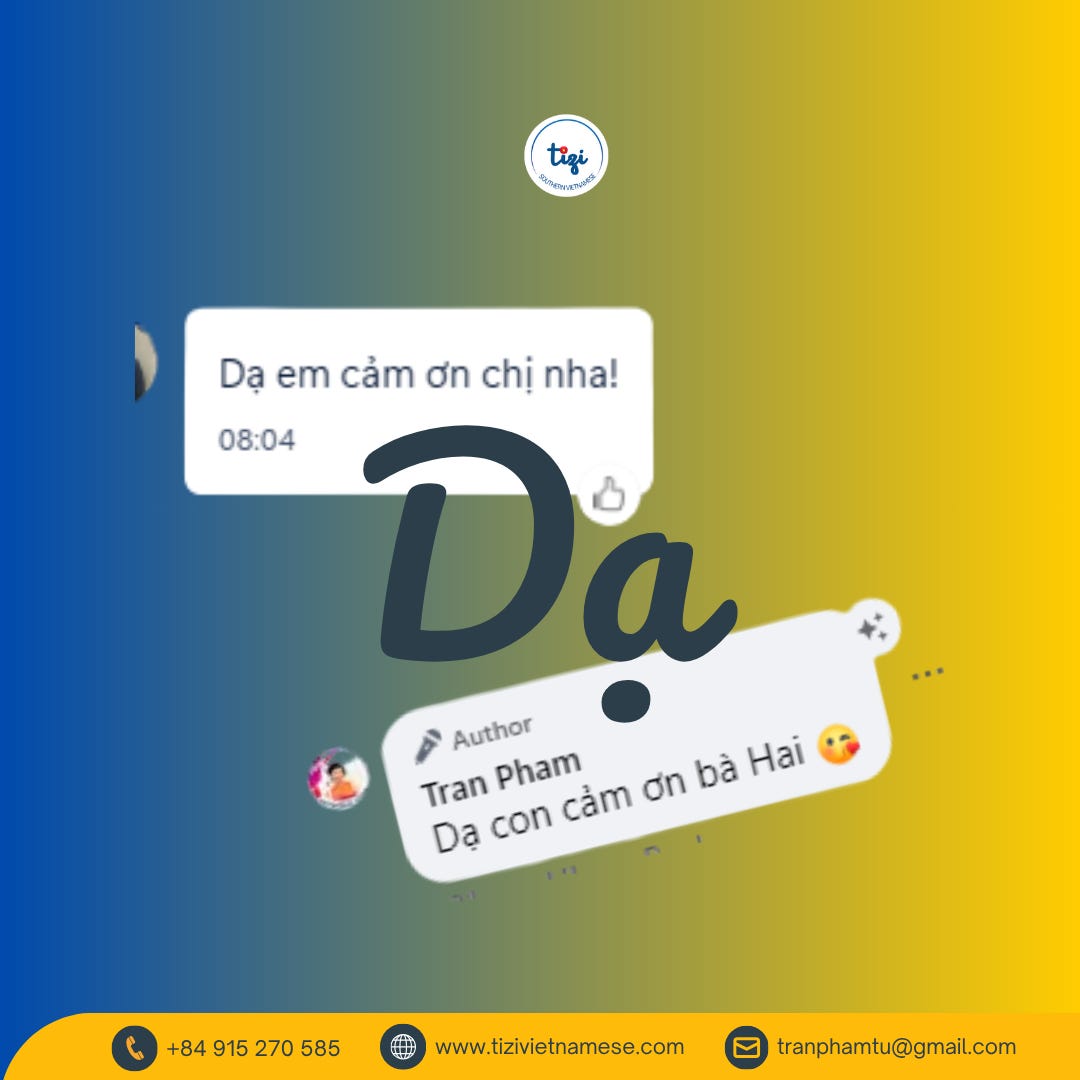
“Dạ” is a small but powerful word in Vietnamese, especially in Southern speech. It shows respect, politeness, and agreement when you reply to someone older or higher in status.
“Dạ” usually comes at the beginning of your answer, making your reply instantly polite. Sometimes, it can stand alone, open a full sentence, or pair with phải / không phải for clear confirmation.
Examples of “Dạ” in Action
1. In a classroom
👩: Xin chào, em là Corey phải không?
Hello, are you Corey?👨: Dạ không, em là Taylor.
No (polite), I’m Taylor.👩: Ồ, cô xin lỗi, cô nhầm. Chào Taylor. Em là người Mỹ hả?
Oh, sorry, I mistook. Hello Taylor. Are you American?👨: Dạ phải.
Yes (polite).👩: Em quen với thời tiết và món ăn ở đây chưa?
Have you gotten used to the weather and food here?👨: Dạ chưa, em chưa ăn nước mắm được.
Not yet (polite), I can’t eat fish sauce yet.👩: À, không sao, từ từ sẽ quen. Giờ mình bắt đầu bài học mới nhé.
Ah, it’s okay, you’ll get used to it slowly. Are you ready to start the new lesson now?👨: Dạ.
Yes (polite).2. In daily life
· At home:
👩 Mẹ: Con ăn cơm chưa?
👨 Con: Dạ chưa. Mẹ ăn rồi hả?👩 Mẹ: Uh mẹ ăn rồi. (No “dạ”)
· At a restaurant:
👨 Khách: Em ơi, tính tiền.
👩 Nhân viên: Dạ!Just one word, but it makes every answer softer, warmer, and more polite.
Quick Cheat Sheet
· Dạ! → answering when called
· Dạ. → short polite yes
· Dạ + sentence → full polite reply
· Dạ chưa → polite “not yet”
· Dạ phải / Dạ không phải → clear confirmation
· À, dạ → polite acknowledgment
✨ Remember:
- No matter how you use it, “dạ” is a little gem that warms up conversations and shows genuine respect. Master this, and your Vietnamese will instantly feel more natural and heartfelt.
- Use “dạ” only with someone older than you, whether by age or status. Otherwise, it might sound too formal or stiff.
Have you ever tried using “dạ”? Give it a go today and see how it changes your conversation! Share your story with us at TiziVietnamese
FAQ about “Dạ” in Vietnamese
Q1: What does “Dạ” mean in Vietnamese?
A1: “Dạ” means yes in a polite, respectful way, especially in Southern Vietnamese.Q2: When should I use “Dạ”?
A2: Use it when replying to someone older, higher in status, or in formal situations to show respect.Q3: Is “Dạ” used in Northern Vietnamese too?
A3: Yes, but it’s more common and natural in Southern Vietnamese speech.