Tones are fundamental in Vietnamese communication—not only for expats and foreigners, but sometimes even for locals.
As a Vietnamese tutor with Southern background, last weeks, I had the opportunity to travel to the North for the first time. Despite careful preparation—including extensive research on streets, hotels, and transportation—I quickly realized that even a native speaker can struggle with unfamiliar tonal variations.
My hotel’s address in English was:
Chan Cam, Hoan Kiem, Hanoi
At first glance, it may seem simple. However, in Vietnamese, each syllable can carry six different tones, and using the wrong one can completely change the meaning. And yes—after a few failed attempts that turned out hilariously wrong, even the taxi drivers couldn’t help but laugh.
Tones are especially crucial for beginners because:
1. A single tone can change meaning entirely – One incorrect tone may render a word nonsensical or change it into a different word altogether.
2. Beginners are particularly vulnerable – New learners oft
en cannot distinguish subtle tonal differences by ear and may misproduce tones, leading to frequent misunderstandings.
3. Regional variation adds complexity – The North uses 6 tones, while the South typically uses 5. Tones learned in one region may differ slightly in another, requiring careful attention for effective communication.
4. Practical communication depends on tones – From ordering food to giving directions, using the correct tone ensures clarity and avoids confusion.
Let’s take “Chan Cam” as an illustrative example:
- Each syllable has 6 possible tones → totaling 36 potential combinations (not including some other possibilities of vowel marks).
- Selecting the wrong tone can entirely change the meaning.
Examples:
- Chân Cấm → forbidden foot / sacred leg (Northern pronunciation)
- Chán Cầm → bored to hold (nonsense, but illustrates tonal shift)
- Chắn Cảm → protective feeling (also nonsensical, demonstrates tone impact)
Even common words, like ma, can mean ghost, but, mother, or rice seedling depending on tone. This highlights why tone mastery is essential, especially for beginners.
After struggling with “Chan Cam,” I realized that vowel marks and tones are truly challenging for foreigners. Even if you recognize the letters, using the wrong tone can make locals pause, laugh, or completely misunderstand you.
For learners and travelers alike, I recommend the following:
· Prioritize tone practice early – Familiarity with tones prevents miscommunication.
· Listen attentively – Observe how locals pronounce words in different regions.
· Practice in context – Apply tones in real conversations for reinforcement.
· Seek clarification – Don’t hesitate to ask native speakers to repeat or correct.
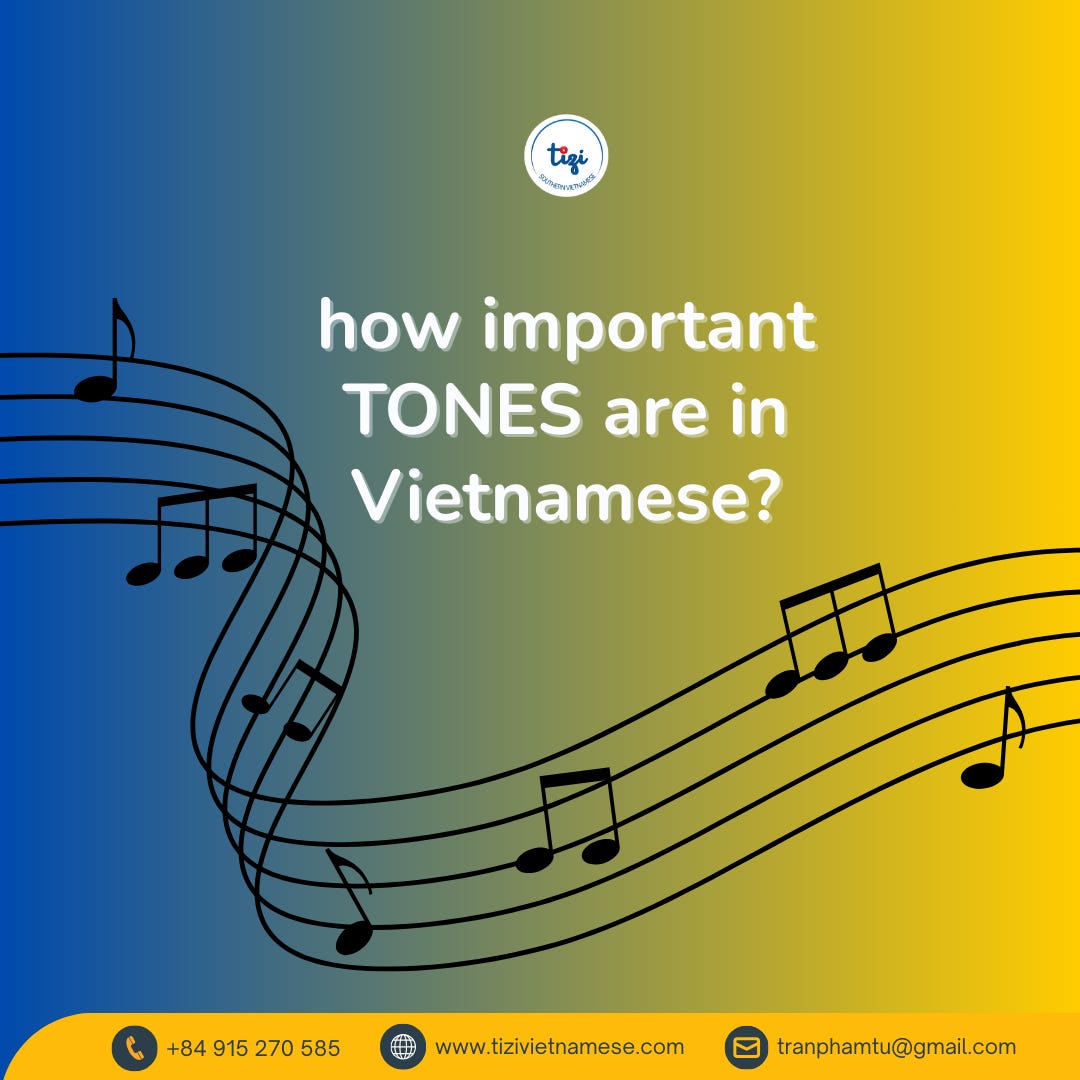
· Keep the “music staff” in mind – Just picture the tones like musical notes; once you put them in the right spots, you’ve got yourself a finished song
This isn’t meant to discourage you; rather, it’s a reminder to give yourself another try whenever you feel stuck on your learning journey if any.
In case you’d like a ready-made pronunciation foundation that shows you exactly when to drop tones and how to pronounce any Vietnamese word correctly (based on clear teaching principles), you can then learn Vietnamese on your own with full confidence. Please feel have a look at this Pronunciation course & free to reach out for more!Message Tranpham